
The blueprint before the agent
Last Thursday and Friday I attended the #EventModeling and Event Sourcing conference in Munich, organised mainly by Martin Dilger . I had not planned to be there. Martin invited me…
Last Thursday and Friday I attended the #EventModeling and Event Sourcing conference in Munich, organised mainly by Martin Dilger . I had not planned to be there. Martin invited me…

I have been reading AWS Marketplace’s report on “The Role of AI in Software Development”. There are useful ideas in it. I am not against AI in the SDLC. Quite…

There is a strange paradox in modern software delivery. We have never had more visibility into the work. We have roadmaps, backlogs, Jira boards, Confluence pages, architecture diagrams, release plans,…

AI is changing software delivery, but maybe not in the way we first expected. The obvious story is that AI can generate code faster. It can write tests, summarize documentation,…

Many teams are now experimenting seriously with AI in the software delivery lifecycle. That is good. But I see a familiar pattern emerging. At first, people use AI for what…

Having worked in different sectors of the industry over more than 30 years, I have seen the same picture again and again. This is not about one company. It is…

You know that moment very early on in a project? You are building a system with complex business rules and long-lived data, maybe a subscription platform or a contract management…
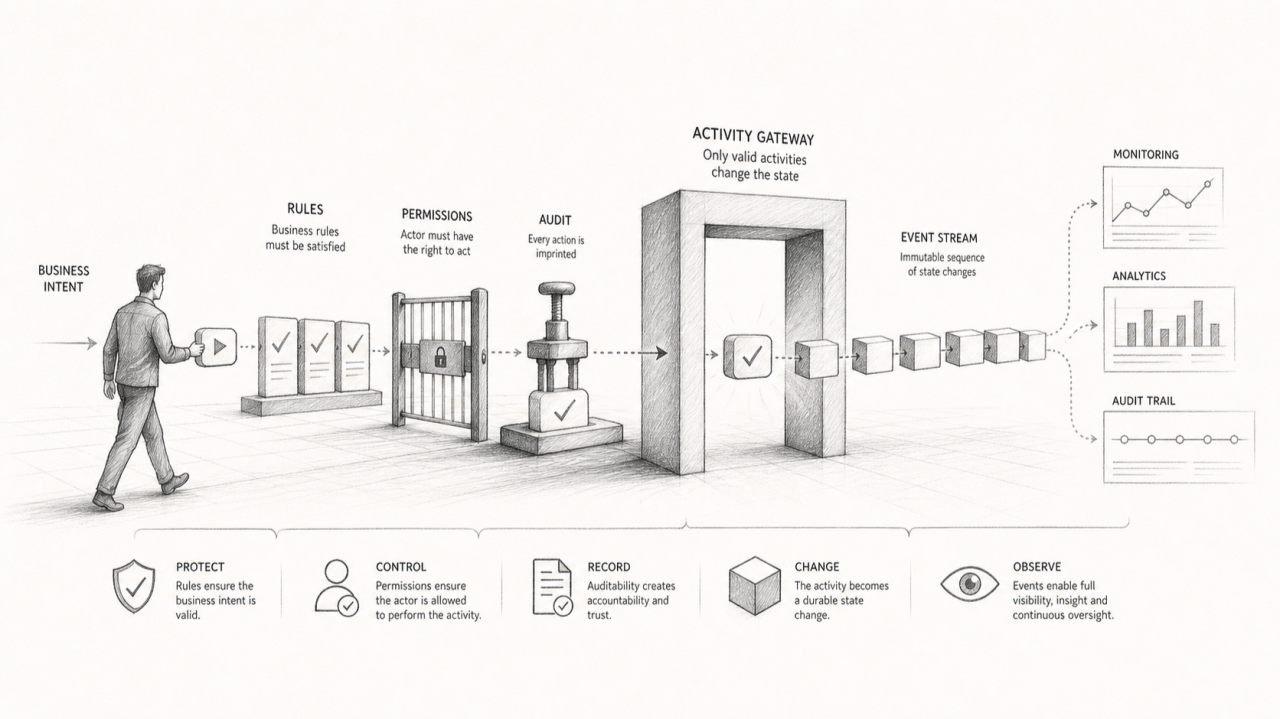
In EventModeling, there is one pattern where everything really comes together. The State Change Pattern. At first glance, it sounds almost trivial: An actor performs an activity that changes something…
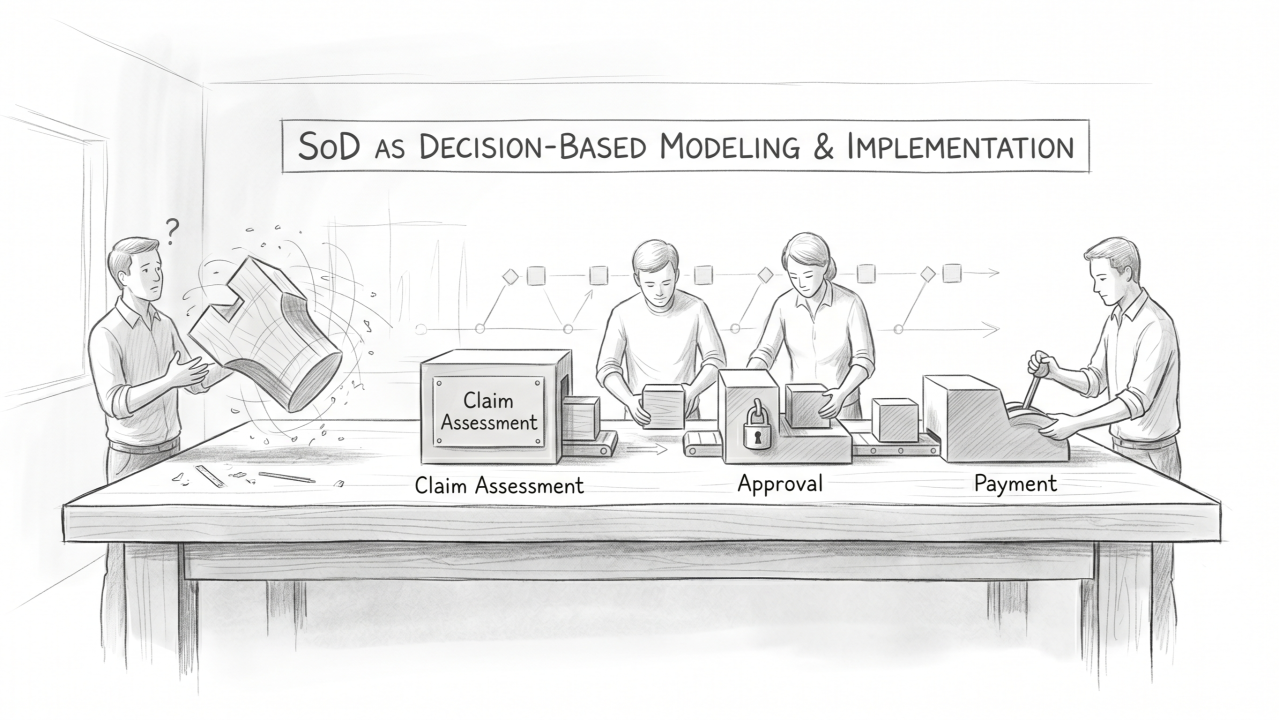
In my last post I argued that Separation of Duties gets treated as a security problem when it’s really a modelling problem. The more I work with this, the more…
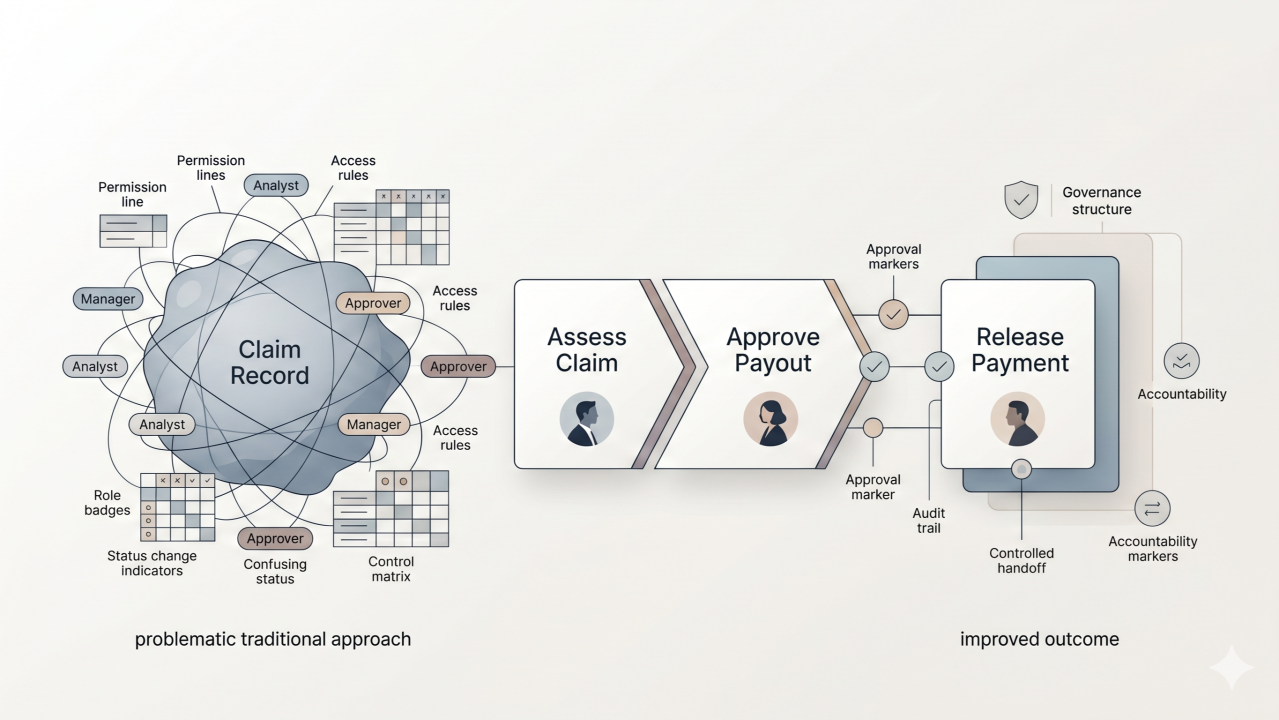
Separation of duties (SoD) is usually treated as a security requirement. So we reach for the usual tools: RBAC, approval workflows, permission matrices, four-eyes principles, admin restrictions, audit logs, exceptions,…